The Best Time to Visit Barbados: Weather & Events
Deciding when to book your flight to Barbados involves more than just checking a calendar; it’s about aligning your tropical expectations with the island’s distinct meteorological rhythm. Whether you are chasing the high-energy festivities of the dry season or the lush, quiet beauty of the rainy months, understanding the Barbados climate is key to a perfect Carlisle Bay experience. This guide dissects the data to ensure your visit to the sunken fleet is timed with surgical precision.
The Dual Seasonality: Dry vs. Rainy Months
Barbados operates on a binary climate system. Unlike the temperate four-season cycle, the island oscillates between the dry, trade-wind-cooled months of winter and the more humid, precipitous period of the summer and autumn. Understanding the nuances between these two allows for a more strategic approach to visitor services and facility planning.
| Season | Months | Avg. High Temp | Rainfall Pattern | Ideal For |
|---|---|---|---|---|
| Dry Season | Dec – May | 28°C (82°F) | Minimal / Low Humidity | Sailing, Sunbathing, Weddings |
| Rainy Season | June – Nov | 30°C (86°F) | Tropical Bursts / High Humidity | Lush Landscapes, Surfing, Budget Travel |
The Dry Season (December – May)
Characterised by the famous ‘northeast trade winds’ that keep the humidity low, this is the gold standard for visitors. It aligns with peak travel months, offering clear skies and consistent sunshine for exploring the sunken fleet of Carlisle Bay. During this period, the atmospheric pressure remains stable, providing the most predictable conditions for maritime excursions.
The Rainy Season (June – November)
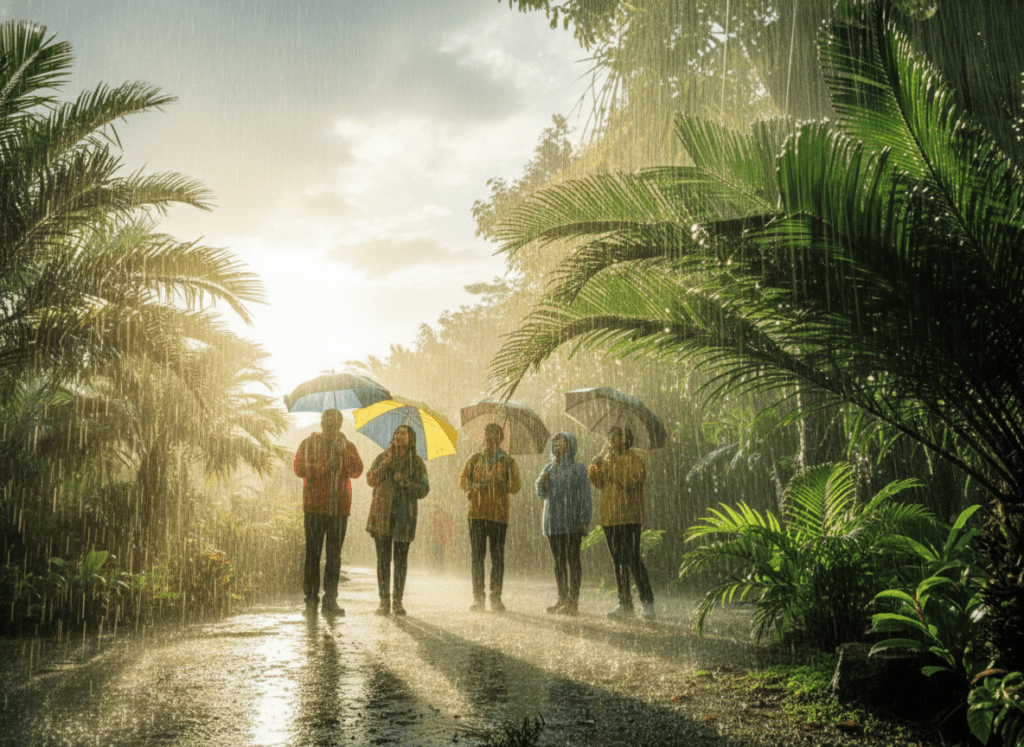
While technically the hurricane season, the geographic position of Barbados in the far southeast often spares it from direct hits. Expect higher humidity and ‘Liquid Sunshine’—brief, intense showers that cool the island before the sun returns minutes later. While rain is more frequent, it rarely persists for an entire day, often clearing the air for dramatic sunset photography.
Don’t let a rainy forecast deter you. Bajan rain is often a refreshing 10-minute interlude that clears the air and leaves the island smelling like a tropical garden.
Local Travel Tip
Humidity and Thermal Comfort: The March vs. November Divide
Temperature readings in Barbados are deceptively consistent, typically hovering between 28°C and 31°C year-round. However, the ‘real feel’ temperature is dictated by relative humidity. If your itinerary involves significant physical exertion, such as walking the South Coast Boardwalk or exploring the historic Garrison, timing your visit to the humidity cycle is essential.
March stands out as the scientifically most comfortable month for shore-side activities. During this window, the relative humidity drops to approximately 75%, its lowest annual point. This coincides with the peak of the trade winds, which provide a constant, cooling ventilation across the South and West coasts. Conversely, November marks the humidity peak at 82-83%. During this time, the dew point rises, making the air feel significantly heavier and increasing the rate of perspiration during coastal hikes.
The constant Atlantic breezes are the island’s natural air conditioning, mitigating the tropical heat even during the humid transition of November.
Optimal Underwater Conditions for Carlisle Bay Snorkeling
For those specifically visiting to dive the six shipwrecks, the December to May window is paramount. During these months, the lack of heavy storm runoff ensures the crystal-clear turquoise waters of Carlisle Bay reach their maximum visibility. However, weather is only one variable; timing your entry into the water is equally critical for seeing the sea turtles and diverse fish populations.
The “9:30 AM Visibility Rule” is a professional recommendation for anyone exploring shallow wrecks like the Berwyn. As the day progresses, the afternoon trade winds intensify, stirring up fine carbonate sediment from the seabed. By midday, visibility can decrease by several metres. Furthermore, sea temperatures remain remarkably stable, fluctuating between 26°C in February and 29°C in September, meaning thermal protection beyond a rash guard is rarely required for skin diving.
January: Maritime Heritage and “Sailing Week”
January is perhaps the most significant month for the maritime community surrounding Carlisle Bay. Barbados Sailing Week takes centre stage, culminating on January 21st—Errol Barrow Day—with the legendary Round Barbados Race. This event sees a spectroscopic range of vessels, from high-tech foiling trimarans to traditional wooden schooners, navigating the island’s perimeter.
The social epicentre of this week is the “Red Hat Party” held at the Barbados Cruising Club, located on the southern edge of Carlisle Bay. This event attracts global sailors and offers a rare opportunity to engage with the island’s deep nautical history. If you are a fan of maritime photography, the sight of the fleet moored in the protected harbour of the Marine Park is unparalleled.
February: The Holetown Festival Nuance
Moving into mid-February, the focus shifts to the West Coast for the Holetown Festival. This event commemorates the arrival of the first English settlers in 1627. For the culturally curious, the “Dooflicky” Parade and the vintage car show are essential highlights. While the main events occur in St. James, the festival atmosphere spills over into Bridgetown, making it an excellent time to visit the Parliament Buildings or the National Armoury.
Easter at Oistins: More Than a Fish Fry
While most tourists are familiar with the Friday night Fish Fry, the Oistins Fish Festival during Easter weekend is a different calibre of experience. It features niche cultural competitions that are vanishingly rare elsewhere, such as fish-boning contests, grease-pole climbing, and traditional net throwing. This is a strategic time for foodies to visit, as the variety of authentic Bajan dishes increases significantly during the festival weekend.
A Hub for Heritage: Exploring the Surroundings
When the midday sun becomes too intense, the area surrounding Carlisle Bay offers some of the most significant historical sites in the Caribbean. Historic Bridgetown and its Garrison, a UNESCO World Heritage site, is just a short walk from the beach. The town’s serpentine street layout is a rare remaining example of 17th-century English medieval town planning exported to the tropics, a sharp contrast to the grid systems found in later colonial cities.
Within the Garrison, the George Washington House stands as a testament to the island’s global influence. It is believed that Washington’s 1751 visit was a pivot point in American history; by contracting smallpox here, he gained the immunity that protected him during the Revolutionary War. Below the property lies a network of secret tunnels, re-discovered in 2011. Originally built for drainage, these tunnels were expanded in the 1820s to allow 3,000 Garrison troops to move covertly across the savannah.
Location & Seasonal Access
No matter the season, getting to the bay is straightforward. During the peak dry season, we recommend checking our transportation guide early to secure taxi bookings or understand the local ZR bus routes during busy cruise ship days. If you are staying on the South Coast, the blue and yellow buses provide frequent, cost-effective access to the park entrance.
Frequently Asked Questions
- When is the best month to visit Barbados for low prices? September and October typically offer the lowest rates for accommodation and tours, though this coincides with the peak of the rainy season. Many hotels use this period for maintenance, so it is a great time to find boutique stays at a fraction of the winter price.
- Does Barbados get hurricanes? While Barbados is technically in the Atlantic hurricane belt, its southern location means it is less frequently hit than islands further north. The official hurricane season runs from June to November, but the island has a robust disaster management system in place for the rare occasions a storm approaches.
- What is ‘Crop Over’ and when does it happen? Crop Over is Barbados’ premier summer festival, celebrating the end of the sugar cane harvest in a tradition dating back to the 1780s. It peaks in late July and early August with Grand Kadooment Day, featuring massive costume parades and calypso music that transforms the entire island.
- Is the water warm enough to swim in January? Absolutely, as the water temperature in January averages around 27°C (80°F), which is warmer than most heated swimming pools in Europe. The sheltered nature of Carlisle Bay ensures that the water remains calm and inviting even when the Atlantic side of the island is rough.
- When is visibility best for snorkeling in Carlisle Bay? Visibility is at its peak during the dry season (December through May) when there is less sediment runoff from heavy rain. For the clearest view of the Berwyn or the Ce-Trek, aim to be in the water before 9:30 AM to avoid the effects of the afternoon winds.
Plan your trip with safety and comfort in mind by reviewing our Tourist Safety Guide or learn more about tipping and currency before you arrive. Whether you choose the festive heights of January or the quiet humidity of November, Carlisle Bay remains the island’s most versatile aquatic playground.