Beyond the Shores: A Deep Dive into the St. Michael Heritage Corridor
Carlisle Bay Marine Park serves as the geographical and cultural anchor of the St. Michael parish. While the bay is globally recognised for its turquoise waters and the sunken fleet of six historic shipwrecks, its true value lies in its position as the gateway to the UNESCO World Heritage site of Historic Bridgetown and its Garrison. This region contains the highest concentration of 18th- and 19th-century military architecture in the Caribbean, allowing visitors to transition from a morning snorkel over the 1919 Berwyn wreck to an afternoon exploring 19th-century subterranean tunnels within minutes.
The Marine Park is not merely a destination for aquatic recreation; it is the central hub for the island’s most significant historical narrative.
St. Michael Heritage Trust
Proximity Guide: Top Landmarks Near Carlisle Bay
| Attraction | Distance from Bay | Rating | Primary Interest |
|---|---|---|---|
| George Washington House | 0.4 km (5 min walk) | 4.7/5 | Colonial History & Tunnels |
| St. Ann’s Fort National Armoury | 0.6 km (7 min walk) | 4.8/5 | Military Cannons |
| Historic Bridgetown Centre | 1.2 km (15 min walk) | 4.8/5 | UNESCO Architecture |
| South Coast Boardwalk | 2.5 km (8 min taxi) | 4.6/5 | Coastal Walking |
| Nidhe Israel Synagogue | 1.8 km (20 min walk) | 4.9/5 | Religious Heritage |
The Historic Garrison District: Immediate Proximity
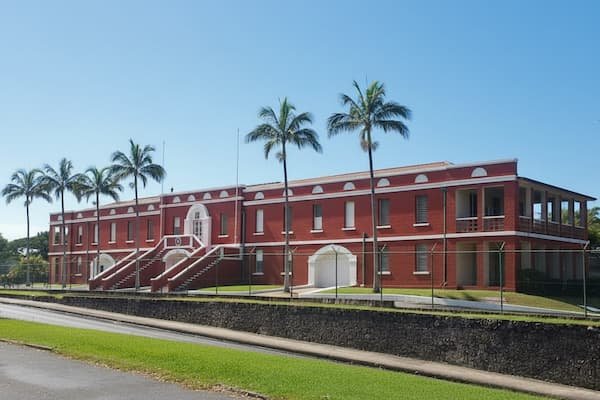
St. Ann’s Fort National Armoury
Constructed in 1705, this hexagonal stone fort serves as the powerhouse of Barbadian military history. It houses the world’s most significant collection of 17th-century English iron cannons, which were meticulously preserved after being recovered from various sites across the island. The site is a testament to the island’s former strategic importance as an “unsinkable” British fortress, designed to protect the valuable harbour of Carlisle Bay from naval incursions during the War of the Spanish Succession.
The crown jewel of the Armoury collection is the rare “Commonwealth Cannon” dating back to 1652. This piece is one of only two remaining in the world and is unique for bearing the coat of arms of Oliver Cromwell, representing a turbulent era of English history frozen in iron. Visitors can view the intricate casting details and the heavy oxidation protection applied by the Barbados Defence Force to maintain these relics in the humid maritime environment.
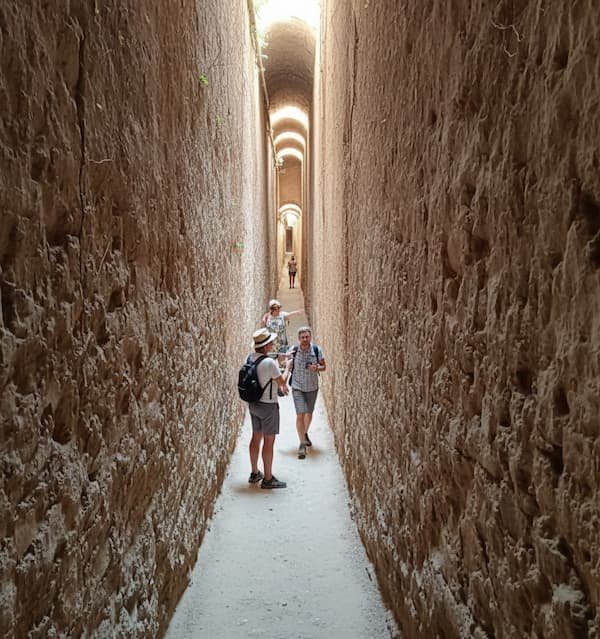
The Garrison Tunnels
Hidden beneath the surface for nearly two centuries, this two-mile subterranean network was only accidentally rediscovered in 2011 during renovations at the George Washington House. The tunnels reach heights of up to 12 feet and narrow widths of 2 to 4 feet in specific sections, showcasing an impressive feat of 19th-century engineering within the porous coral limestone. They represent the sophisticated military infrastructure that defined the Garrison during its height of activity between 1780 and 1850.
Originally built around 1820, the tunnels served a dual purpose: facilitating the secret movement of troops across the Garrison grounds and acting as a sophisticated drainage system for the swampy Savannah lands. Guided tours allow visitors to walk through sections of these cool, limestone-walled passages, providing a tactile connection to the British soldiers who once navigated them in complete darkness. The air remains remarkably fresh due to the original ventilation shafts that still function today.
Regional Highlights: Cultural & Natural Landmarks
Nidhe Israel Synagogue & Mikvah
Established in 1654 by Sephardic Jews fleeing persecution in Brazil, the Nidhe Israel Synagogue is the oldest consecrated Jewish site in the Western Hemisphere. The current building, reconstructed in 1833 after a hurricane, features elegant Gothic arches and marble floors, but the real historical weight lies in the adjacent cemetery and museum. It stands as a symbol of the religious pluralism that has existed in Bridgetown for nearly four centuries, influenced by the arrival of European refugees who introduced sugar cultivation technology to the island.
The site’s most remarkable feature is the Mikvah, a ritual bath dating back to the 17th century, which was rediscovered in 2008 during an archaeological dig. This bath is fed by a natural underground spring and is the only full-immersion ritual bath of its era in the Americas. Exploring the museum allows visitors to view 17th-century artifacts recovered from the site, including pottery shards and religious items that illustrate the daily life of the early Jewish community in Barbados.
The Changing of the Guard at the Clock Tower
Located at the iconic Clock Tower of the Main Guard, the Changing of the Guard ceremony is a meticulously choreographed military tradition that occurs every Thursday at 12:00 PM. The ceremony takes place against the backdrop of the crimson-walled building which has stood since 1804. It serves as a living link to the West India Regiment, providing a formal display of the discipline and precision that defined British colonial rule in the Caribbean.
The guards wear the iconic Zouave Uniform, a French-inspired regimental dress adopted in 1858 by the West India Regiment. This striking ensemble consists of a red waistcoat, a white shirt with voluminous sleeves, and dark blue baggy trousers, topped with a white turban. The use of such an elaborate uniform in the tropical heat of St. Michael highlights the rigid adherence to military protocol that has been preserved as a point of national pride and heritage tourism.
Rihanna Drive (Urban Cultural Site)
Formerly known as Westbury New Road, this residential street was officially renamed Rihanna Drive on Barbados Independence Day, November 30, 2017. It is the childhood home of the global icon and National Hero of Barbados, Robyn Rihanna Fenty. The street has been transformed into a colourful tribute to her success, located about 3km from the Marine Park, making it an easy 10-minute taxi journey for those interested in the island’s modern cultural footprint.
Visitors can view the “Rihanna Drive” monument, a large plaque that features a personal message from Rihanna, the Barbados Coat of Arms, and details of her achievements. The pavement features a marker with a sun and a trident symbol in front of her original home, which remains a private residence but is easily identifiable by its vibrant paint. It provides a sharp contrast to the colonial history of the Garrison, showcasing the island’s contemporary global influence.
Cole’s Cave (Natural Heritage)
For those willing to venture slightly inland from the coastal hub, Cole’s Cave offers a raw look at the island’s geological formation. Entry is gained via the “Jack-in-the-Box” gully, requiring a steep descent into the limestone karst. Inside, the cave features an active underground river whose exact termination has never been fully traced. The environment is entirely undeveloped, offering a starkly different experience from the manicured grounds of the Garrison Savannah.
The cave system is home to a colony of Barbadian bats and rare freshwater crayfish, which have adapted to the lightless subterranean river. Exploring the interior requires wading through knee-deep water and navigating low-ceiling passages, making it suitable for physically active travellers. The temperature inside the cave remains a constant 80°F (27°C) year-round, providing a natural cooling system away from the Caribbean sun.
The Mystery of the Chase Vault
Located in the cemetery of Christ Church Parish Church, a short transit from the bay, the Chase Vault is the site of one of the Caribbean’s most enduring mysteries. The legend of the “moving coffins” began in the early 19th century when the heavy lead coffins inside the sealed vault were found in disarray every time the vault was reopened for a new burial. This occurred despite the massive coral stone door being cemented shut and requiring several men to move.
The phenomenon was investigated personally by Governor Lord Combermere in 1819. He attempted to solve the mystery by covering the vault floor in fine white sand and sealing the entrance with his personal signet ring. When the vault was reopened months later in 1820, the coffins had moved again, but the sand remained undisturbed, showing no footprints or signs of water ingress. Today, the vault stands empty, as the occupants were eventually buried in separate graves to put an end to the “unrest.”
Strategic Transit: Navigating the St. Michael Hub
Most landmarks within the ‘Garrison Historic Area’ are situated within walking distance of the visitor services at Carlisle Bay. For those heading into Bridgetown or further south toward the Boardwalk, the island’s transportation infrastructure is highly efficient. Travellers can utilise the “ZR” white vans or the yellow privately-owned buses, which run every few minutes along the main coastal highway for a flat fare of $3.50 BDS.
If you are arriving from the Bridgetown Cruise Port, the walk to the Marine Park takes approximately 20 minutes, passing through the historic Careenage. For more detailed directions from the airport or port, please refer to our Transportation Guide. We recommend carrying small denominations of local currency for bus fares, as discussed in our guide on Bajan Currency and Tipping.
Always carry a refillable water bottle when walking between heritage sites; the humidity in the St. Michael parish can lead to rapid dehydration during midday explorations.
Accommodations & Coastal Connections
While the marine park is globally recognised as a heritage hub, visitors frequently seek lodging within its immediate vicinity. When researching hotels in Carlisle Bay, Barbados, you will note that large-scale resorts are deliberately restricted directly on the crescent beach to preserve the natural harbour and its fragile ecosystem. However, a select few established properties sit just steps from the shoreline.
The Radisson Aquatica Resort and the Hilton Barbados Resort occupy prime positions near Needham’s Point at the southern edge of the bay. These properties provide direct access to the calm waters and the marine park’s six shipwrecks, including the 12-metre depth of the Ce-Trek. For those seeking all-inclusive or family-owned options, Sugar Bay Barbados and Coconut Court Beach Hotel are located roughly 600 metres from the bay’s centre, requiring only a short walk to the historic Garrison area.
Travellers mapping out their coastal itinerary often ask: how far is Brighton Beach, Barbados, from Carlisle Bay? The distance is approximately 5 kilometres (3 miles) to the north. Brighton Beach sits just beyond the Bridgetown Cruise Port and the Spring Garden Highway. While Carlisle Bay is heavily defined by its 18th-century military history and aquatic recreation, Brighton Beach provides a quieter, residential atmosphere that is popular for early morning swims and observing commercial ships entering the deep-water harbour. You can reach Brighton Beach from the Garrison in roughly 15 minutes via a local taxi or public transit through the Bridgetown centre.
Frequently Asked Questions about Nearby Attractions
- Can I walk to the George Washington House from the beach? Yes, the George Washington House is located approximately 400 metres from the southern end of Carlisle Bay, making it a 5 to 10-minute walk depending on your pace. The route is clearly signposted from the main road and passes by several historic military barracks.
- Are there entrance fees for the Garrison Tunnels? Yes, the tunnels are managed by the George Washington House, and there is a combined entrance fee for the house and tunnel tour. As of the current season, adult entry is approximately $20 USD, which includes a handheld audio guide that provides historical context on the 19th-century engineering.
- Is Bridgetown safe for walking after dark? While the Garrison area is generally safe, it is recommended that visitors stick to well-lit main roads or use taxis after sunset. For more detailed safety protocols, including ocean current warnings and sun protection, see our Tourist Safety Guide.
- How often does the Changing of the Guard occur? The ceremony takes place once a week, every Thursday at exactly 12:00 PM at the Main Guard Clock Tower. It is a popular event for photography, so it is advisable to arrive at least 15 minutes early to secure a viewing spot on the Savannah.
- Can I visit the Chase Vault for free? The Chase Vault is located within the Christ Church Parish Church cemetery and can be viewed during daylight hours at no cost. However, it is a place of active worship and burial, so visitors are expected to maintain a respectful silence while exploring the grounds.
After a day of heritage exploration, you may wish to return to the shoreline for refreshment. The bay offers a variety of dining and beach bars where you can find authentic flying fish sandwiches and local rum punch to complete your Barbadian experience.